Japandi Interior Design: How to Master the Art of Warm Minimalism
Interior design is shifting from stark minimalism to spaces that foster serenity, warmth, and purpose. Japandi, which blends Scandinavian functionality with Japanese rustic minimalism, leads this movement.
Scandinavian design (Hygge) emphasizes comfort and functionality, while Japanese aesthetics (Wabi-Sabi) value imperfection, nature, and subtle elegance. Together, they form a timeless balance called Warm Minimalism.
Below is a curated material palette and guide to help you integrate this aesthetic into your home.
1. The Core Philosophy: Less, But Better
Japandi encourages selecting elements with clear functional or emotional value, rather than filling a room unnecessarily. Prioritize handcrafted ceramics, organic shapes, and items that develop character over time instead of mass-produced decor. Keep spaces open, uncluttered, and inviting.
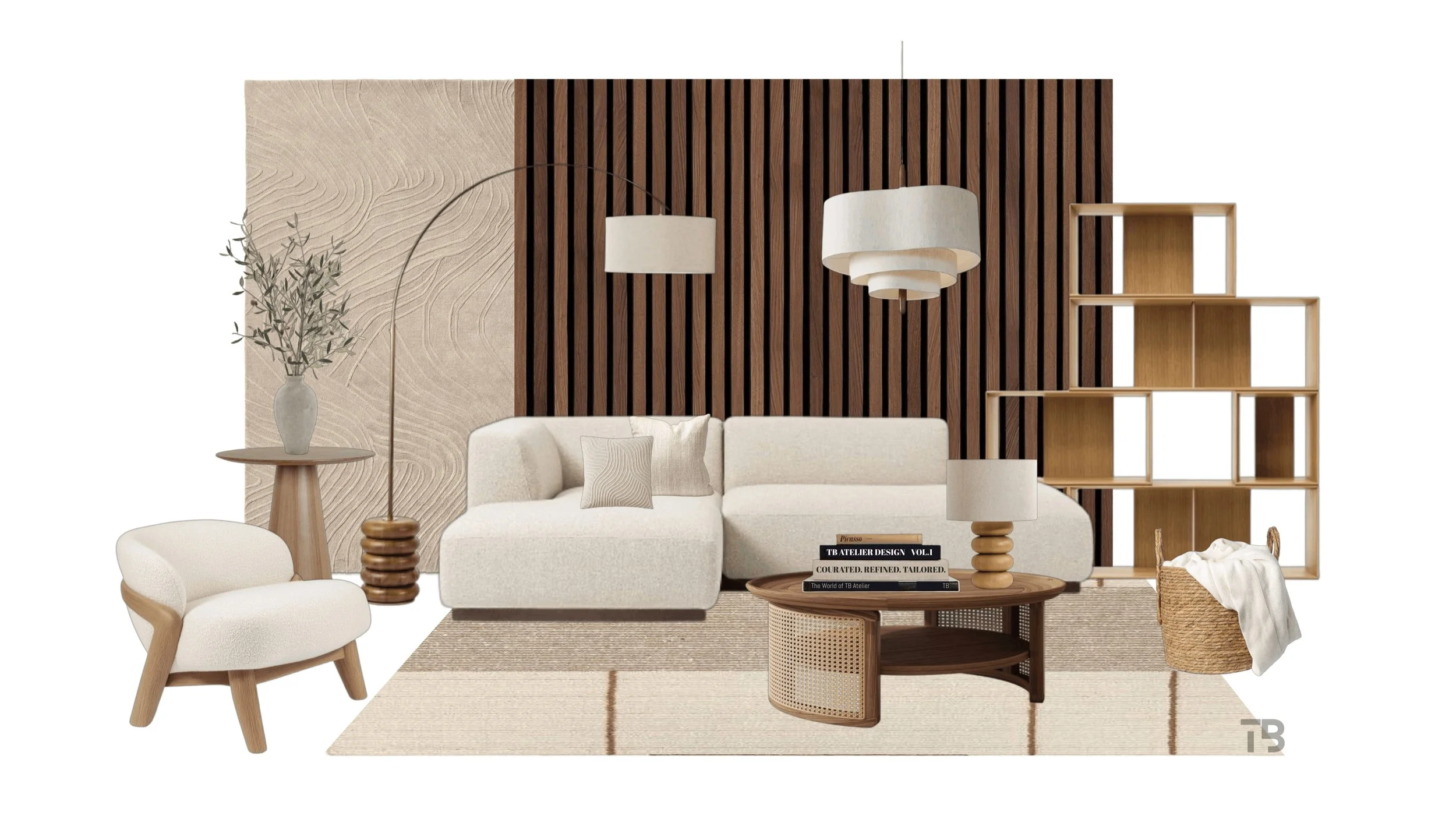
Japandi design merges Scandinavian functionality with the elegance of traditional Japanese spaces. To achieve an open, airy flow, use low-slung furniture such as platform seating, grounded coffee tables, and streamlined shelving. Placing furniture close to the floor draws the eye downward, making ceilings appear higher and the space more expansive. Enhance this effect with soft, diffused natural light from sheer linen curtains or warm paper pendant lamps.
2. Light Woods and Organic Textures
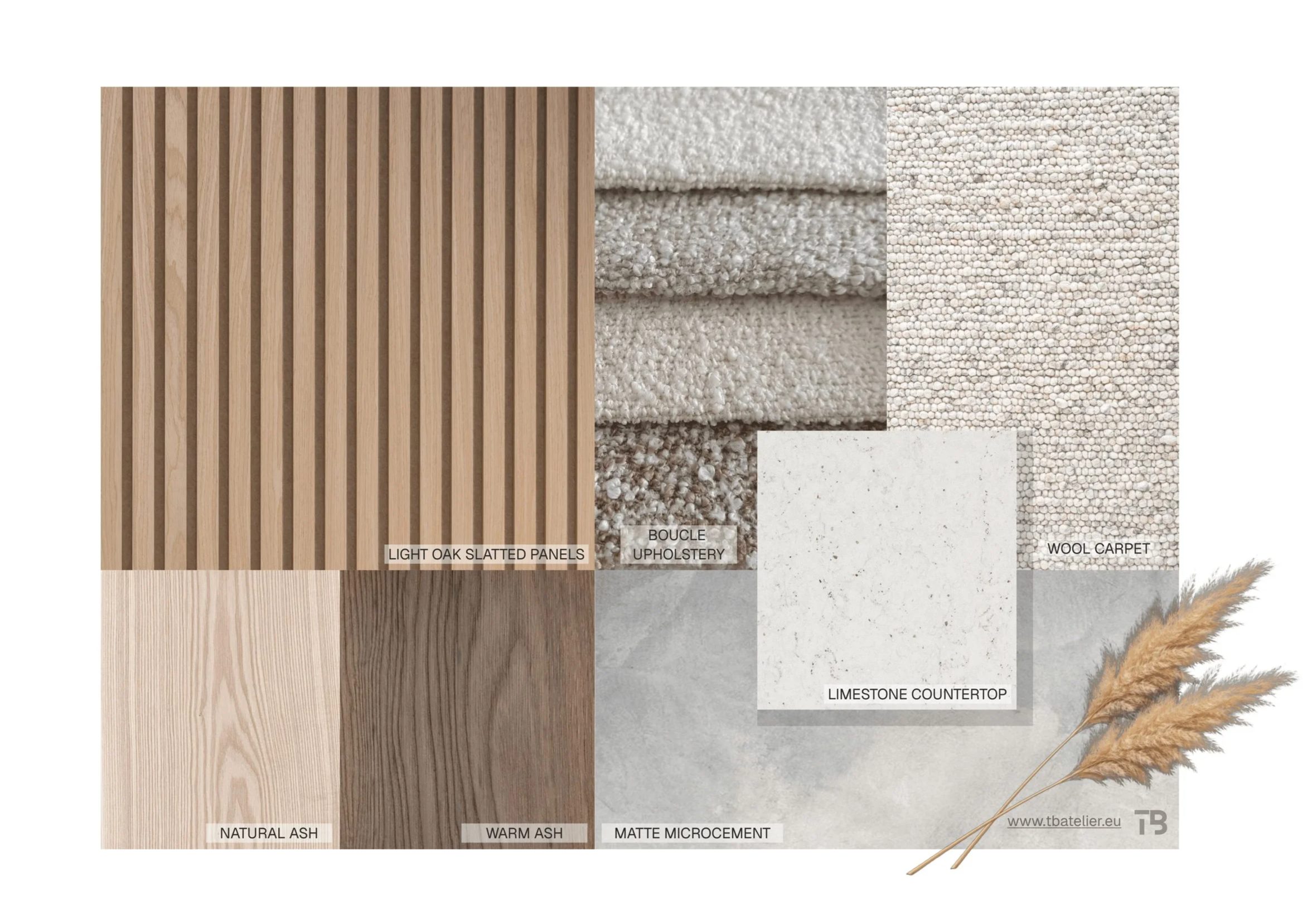
The material palette defines Japandi style. Focus on tactile, natural materials to achieve this effect:
Muted Timbers: Choose light oak, ash, or natural beech instead of heavy, dark woods. Use slatted wood wall panels or custom joinery to introduce subtle vertical texture.
Tactile Fabrics: Layer unbleached linen curtains, bouclé upholstery, and wool rugs. Favor subtle texture contrasts rather than bold patterns.
Natural Stone & Microcement: Opt for matte microcement floors or limestone countertops to ground the space and create a calm, architectural atmosphere.
3. A Grounded, Earthy Color Palette
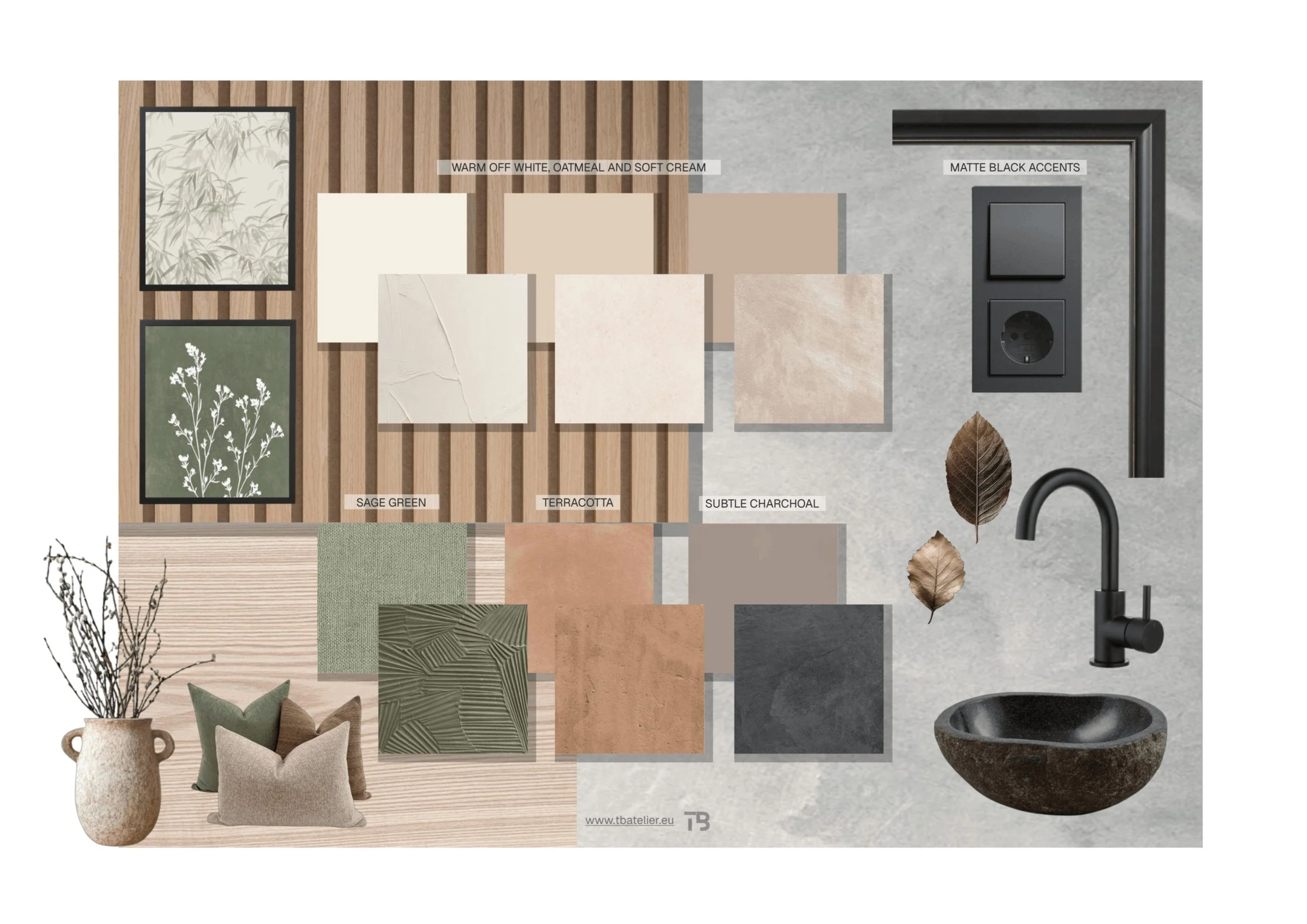
Unlike classic minimalism, which relies on pure white, Japandi uses muted, nature-inspired tones:
Base: Warm off-white, oatmeal, and soft cream.
Muted Accents: Sage green, terracotta, muted taupe, and subtle charcoal.
Contrast: Use matte black accents in lighting, hardware, or slim furniture frames to anchor the soft background.
Looking to Redefine Your Space?
Whether you are planning a renovation or seeking tailored interior design solutions, TB Atelier specializes in architectural concepts, spatial planning, and material curation. Explore our portfolio or contact us to discuss your project.
